Residential complexes
Your charger in the complex, fully approved.
Whether you live in a complex or manage one, we design an installation the owners can approve.
- Free site visit when you quote online
- VAT included
- Installed in 5–7 business days on average
- RETIE-certified installation
I live in a complex
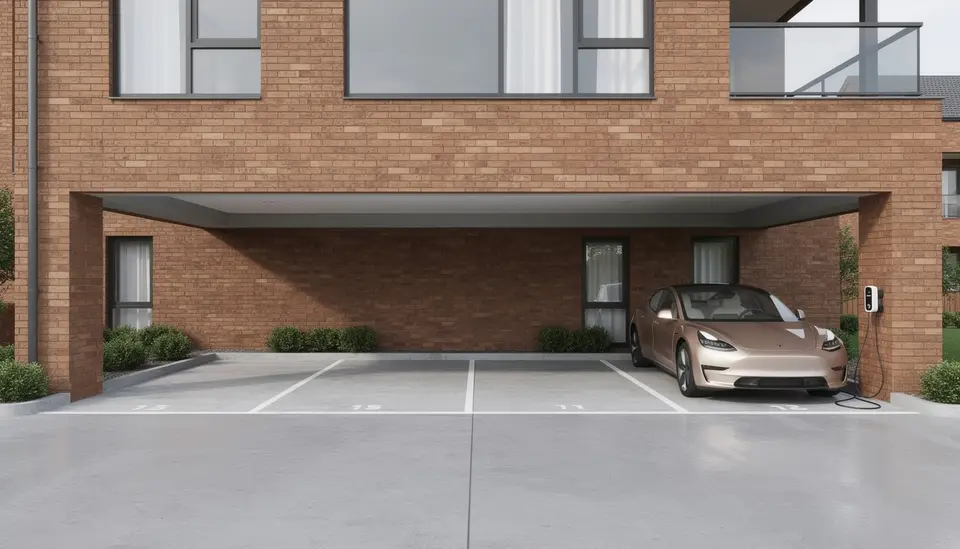
We install in your parking spot connected to your meter. We support you with management and the board: we prepare the technical proposal and answer their questions. With Standard, this support is an additional service priced case by case. With VIP it is included: we prepare and send the request, follow up and tell you the answer.

I manage a complex
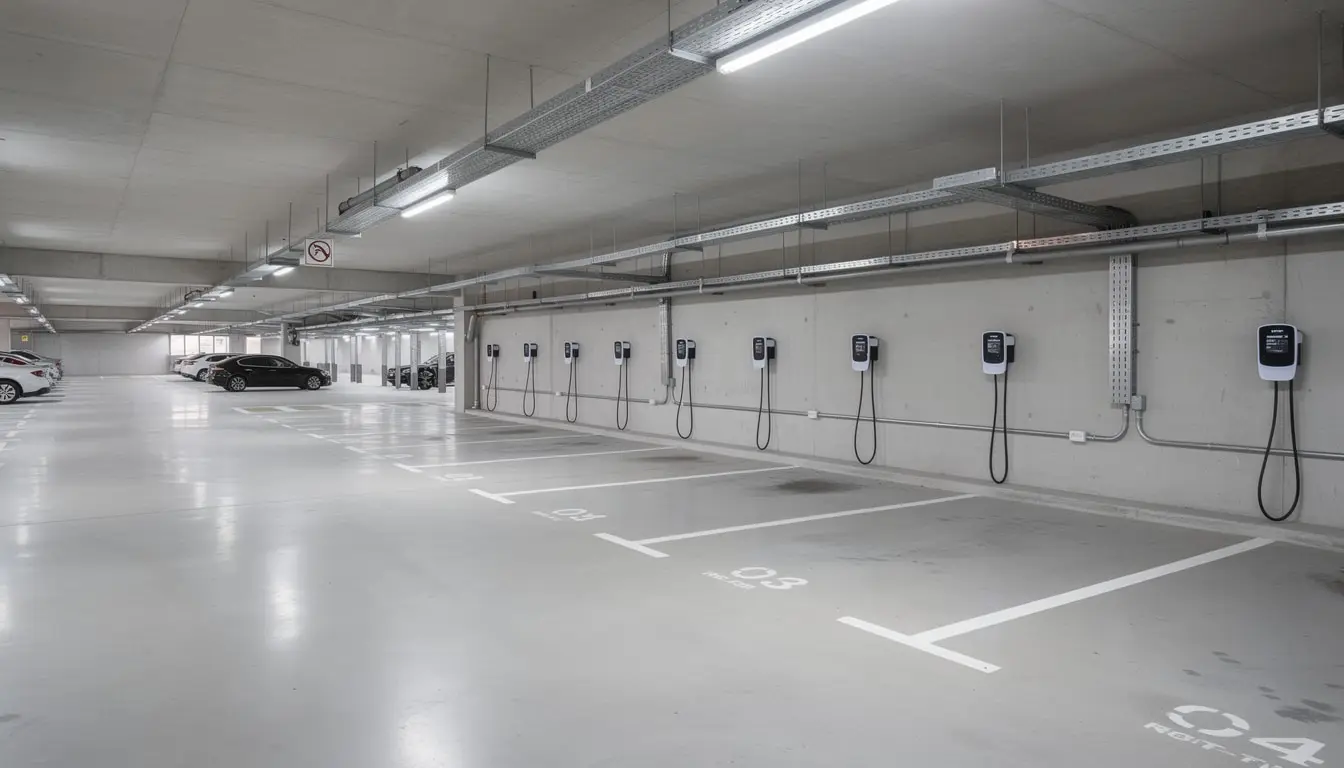
We design shared charging infrastructure for residents: electrical capacity, point placement, metering and phased growth.
Neighbors Package
Do your neighbors drive electric too? Install together and save up to 30%.
Checklist
What you need to install in your complex
Approvals, equipment and documents, with who handles each step. Download it and bring it to management.
1. Before asking for approval
- Check the property certificate or the bylaws: is your parking spot private, common with exclusive use, or common? That defines who approves.You
- Locate your meter. The charger normally connects to your own meter so the consumption is billed to you, not the complex (Law 1964 of 2019, art. 10).You
- Free site visit: meter and service capacity, cable route and charging point.e-Tec
2. Owners association approvals
- We send the written request to management with the technical proposal, cable route and charging point, with a copy to you.e-Tec
- If the cable runs through common areas (almost always, from the meter room) or the spot is common property, the owners assembly decides. The board and manager review and present the request.Management
- Record the approval in the minutes, with the conditions: work hours, route and who is responsible.Management
- Notify the complex's insurer of the new electrical installation (change in risk).Management
3. Equipment and installation
- Design and load calculation signed by a licensed electrical engineer.e-Tec
- Dedicated circuit from your meter, with breaker, RCD protection and grounding.e-Tec
- Charger and materials with product certification. Cable gauge sized for the distance and power.e-Tec
- Tidy conduit through common areas; patching and paint wherever we work.e-Tec
4. Documents and works
- Staff list with current social security and occupational insurance, plus work-at-height certificate if needed.e-Tec
- Contractor's liability insurance policy, if management requests it.e-Tec
- Work hours and use of common areas according to the internal rules.Management
- At completion: RETIE compliance declaration signed by the engineer and handover certificate with photos.e-Tec
- Keep copies of the assembly minutes and the RETIE declaration with your property documents.You
If the assembly denies it without a technical reason: coexistence committee, then mediation and, if needed, challenge the minutes in court within 2 months (Law 675 of 2001, art. 49).
Practical guide based on Law 675 of 2001, Law 1964 of 2019, RETIE and Ministry of Housing opinions. It does not replace your bylaws or legal advice.
Owners association approvals
Do I need approval from the assembly?
Who pays for the electricity my charger uses?
What documents do you give to management?
What about common areas the conduit goes through?
Know your price range today
Under 1 minute. Give us the distance and the site visit is free.